
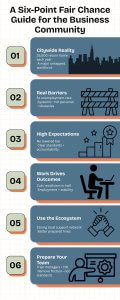
1. What’s at Stake For the Community
About 25,000 people are released each year from local jails, state prisons, and federal facilities into Philadelphia alone. Roughly one in five Philadelphians has some form of criminal record. This isn’t a fringe issue, it’s a citywide reality. When that many people are locked out of the workforce, the consequences land on everyone: higher public costs, weaker neighborhoods, a talent pool left untapped. Second chance hiring is a business decision, a civic decision, and an economic one, often at the same time.
2. What’s at Stake for the Individual
A criminal record can disqualify someone from jobs, housing, professional licenses, and public benefits before they ever walk in the door. Returning citizens face unemployment at rates five times higher than the general population. The compounding pressure of stigma, instability, and limited support makes failure more likely than success, not because of who people are, but because of what they’re up against. Understanding those obstacles isn’t about lowering your expectations. It’s about knowing what you’re asking someone to overcome.
3. Have High Expectations
The worst thing an employer can do for a returning citizen is lower the bar. People who have navigated real hardship don’t need pity, they need a fair shot and consistent standards. The employers who see the best outcomes treat second chance hires the way they treat everyone else: clear expectations, real accountability, genuine investment in their success. Partnering with a transitional employment organization (like Baker Industries, Triple Bottom Brewing and others) can help. Providing the structured on-ramp that prepares people for exactly that kind of workplace. When the bar is high and the support is real, people rise to meet it.
4. A Job Is the Most Powerful Reentry Tool
Employment doesn’t just provide income, it changes outcomes at every milestone. Those employed within two months of release are about half as likely to reoffend as those who remain unemployed. By three years, people with stable employment have a recidivism rate of around 16%, compared to 52% for those without work. Employment isn’t a reward for successful reentry. It’s what makes reentry successful. When you hire someone returning from incarceration, you’re not taking a chance, you’re giving one.
5. Tap Into the Ecosystem
Philadelphia has a growing network of nonprofits, social enterprises, and service providers built to support returning citizens with housing assistance, therapy, transitional employment, and other wraparound resources. Employers who connect with these organizations don’t just access better-prepared candidates; they gain an ongoing support system that helps employees stay stable once they’re on your payroll. A transitional employer like Baker Industries can serve as the on-ramp: by the time someone comes to you, they’ve already built work habits, references, and confidence. You’re not going it alone, you’re joining a community already invested in this person’s success.
6. Prepare Your Own House
The partnership doesn’t stop at the front door. HR professionals and front-line managers benefit from understanding the specific obstacles returning employees face, background check stigma, parole requirements, gaps in work history, the weight of reestablishing trust. This isn’t sensitivity training for its own sake; it’s practical preparation that prevents small misunderstandings from becoming big problems. The goal isn’t to interrupt work or lower standards. It’s to clear the way for your new employees to do what they’re already capable of doing.